How to plan wedding floral design in Los Angeles: a complete guide
We’ve been designing wedding florals in Los Angeles for over a decade. The couples who come to us aren’t looking for something off a mood board they found online. They want florals that feel like them, that work in the specific room they’ve chosen, and that hold up beautifully from ceremony to last dance. That takes planning and a clear point of view. This guide covers everything we know about making it work.
What makes wedding floral design in Los Angeles different from anywhere else?
Los Angeles gives you options that most cities can’t. The venue range alone is extraordinary: Malibu cliffs overlooking the Pacific, lush garden estates in Pasadena, grand hotel ballrooms in Beverly Hills, intimate vineyard properties out in Temecula, rooftops above Downtown LA, and beachside spaces in Santa Monica where the ceremony backdrop is the ocean itself.
Each of those settings asks for something completely different from the florals. A tight hotel ballroom in Century City rewards tall, architectural centerpieces that pull the eye upward. A wide-open garden in Bel Air needs florals that feel natural and unhurried, not theatrical. A Malibu beachfront ceremony wants blooms that photograph well in strong natural light. None of these are the same job.
Then there’s the growing season. Southern California’s Mediterranean climate means we can source peonies in spring, dahlias in late summer, anemones in winter, and garden roses almost any time of year. That access shapes the design from the start. When we’re building a floral plan for a May wedding in Beverly Hills versus a November wedding in Palm Springs, the flower selection, the color palette, and the whole feel of the room shifts accordingly.
How do LA venue types shape your floral choices?
Venue type is the single biggest factor in floral planning. We sit down with every couple and talk through the architecture before we discuss a single flower.
Beach and coastal venues in Malibu, Santa Monica, and Laguna Beach have natural light that shifts dramatically throughout the day. Soft whites, blush, and ivory hold beautifully on camera in those conditions. Heavier, darker palettes can look muddy in bright midday sun. We also think about wind. Tall, top-heavy arrangements on an exposed terrace need proper anchoring, and some blooms won’t stay pristine through a four-hour outdoor reception in July.
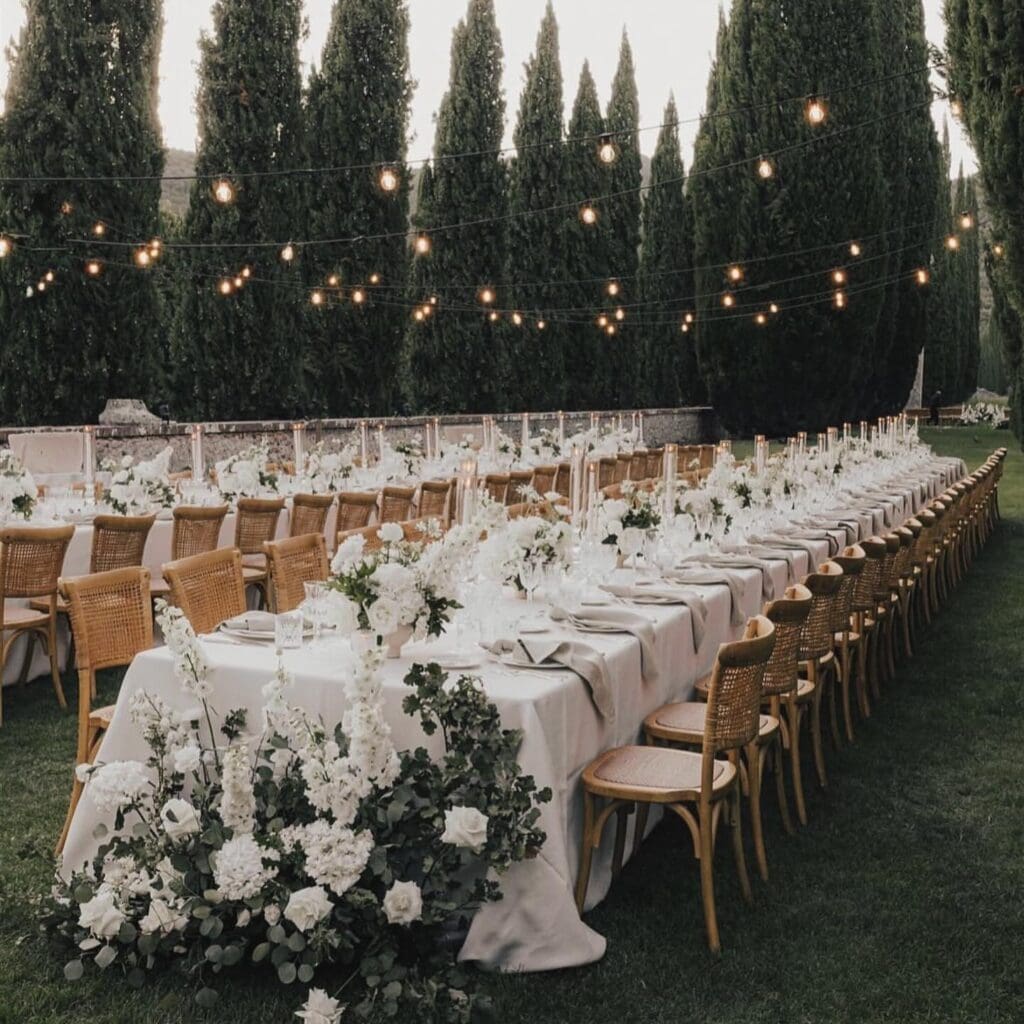
Garden estates in Pasadena, Bel Air, and Calabasas lend themselves to a more organic, layered approach. We love mixing garden roses, sweet peas, and trailing jasmine for that kind of setting. The goal is florals that look as though they grew in that garden rather than arrived in a van.
Hotel ballrooms like the Biltmore, the Beverly Wilshire, and the Langham in Pasadena have fixed architecture and consistent artificial lighting. That’s actually an advantage. We can design precisely for those lighting conditions and rely on tall centerpieces and floral columns to create vertical drama in a room where the ceiling height allows it.
Vineyard and desert venues in Temecula, Ojai, and Palm Springs call for earthy, textural palettes. Protea, pampas grass, dried elements, dahlias in rust and terracotta. These settings have a warmth to them that fights soft pastels, and they reward couples who commit to a bolder, more saturated color direction.
Which season produces the best wedding flowers in Southern California?
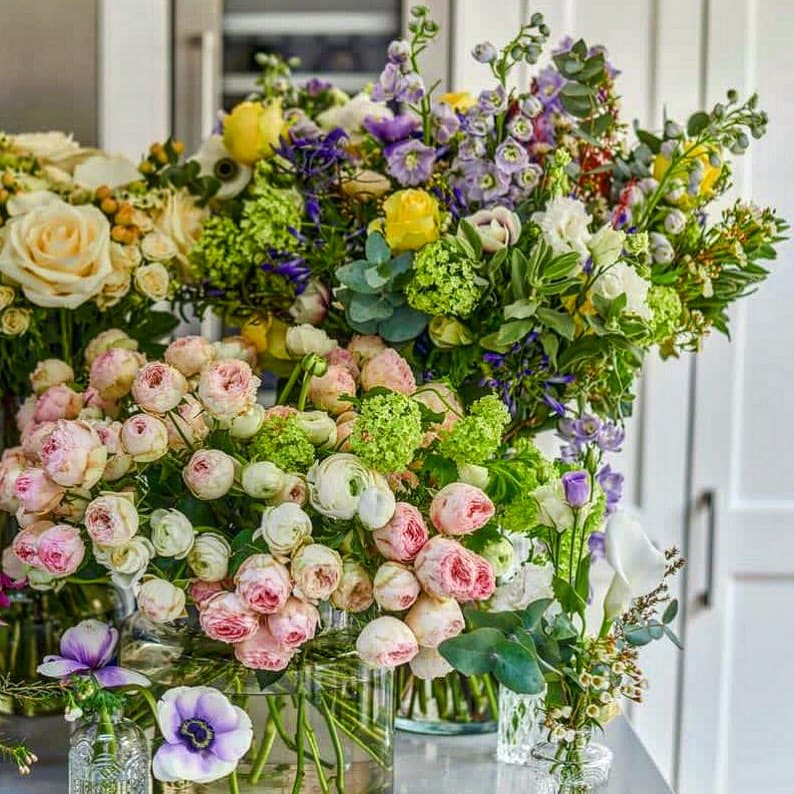
Spring, from March through May, is the most celebrated season for wedding florals in LA. Peonies, ranunculus, sweet peas, and lilacs are all at their peak. If you want lush, romantic, heavily petaled arrangements in soft pinks and creams, a spring date gives you the best selection.
Summer brings a completely different energy. Dahlias, zinnias, lisianthus, and sunflowers are plentiful from June through August. The palette opens up: fuchsia, coral, golden yellow, deep burgundy. Summer couples who lean into bold, saturated color end up with some of the most striking wedding photography we produce.
Fall is the season we personally find most interesting to design for. September through November brings burgundy dahlias, chocolate cosmos, amaranthus, and warm eucalyptus tones. The palette has real depth to it. An October wedding at a vineyard in Temecula with florals in deep plum, rust, and ochre is one of those combinations that photographs like a painting.
Winter in LA is mild enough for fresh florals year-round. Anemones, garden roses, orchids, and ranunculus all source well from December through February. The surprise for many couples is that winter can still be lush and colorful here. We just swap the seasonal palette toward cooler, richer tones and lean on greenery and structured stems.
If you’re curious how seasonal bloom availability affects specific design decisions, our post on incorporating seasons into floral design goes deeper on this.
What color palettes work best for LA weddings?
Los Angeles weddings tend to run warmer and bolder than weddings in other cities. The light here is different. Soft, muted tones that look elegant in a cloudy British garden can read as flat or washed-out in full California sunshine. That doesn’t mean you can’t do soft. It means you have to think about contrast and texture differently.
White and ivory are timeless and work beautifully in coastal and garden settings, especially when paired with layers of green: eucalyptus, ferns, and tropical leaves to stop the arrangement from feeling flat.
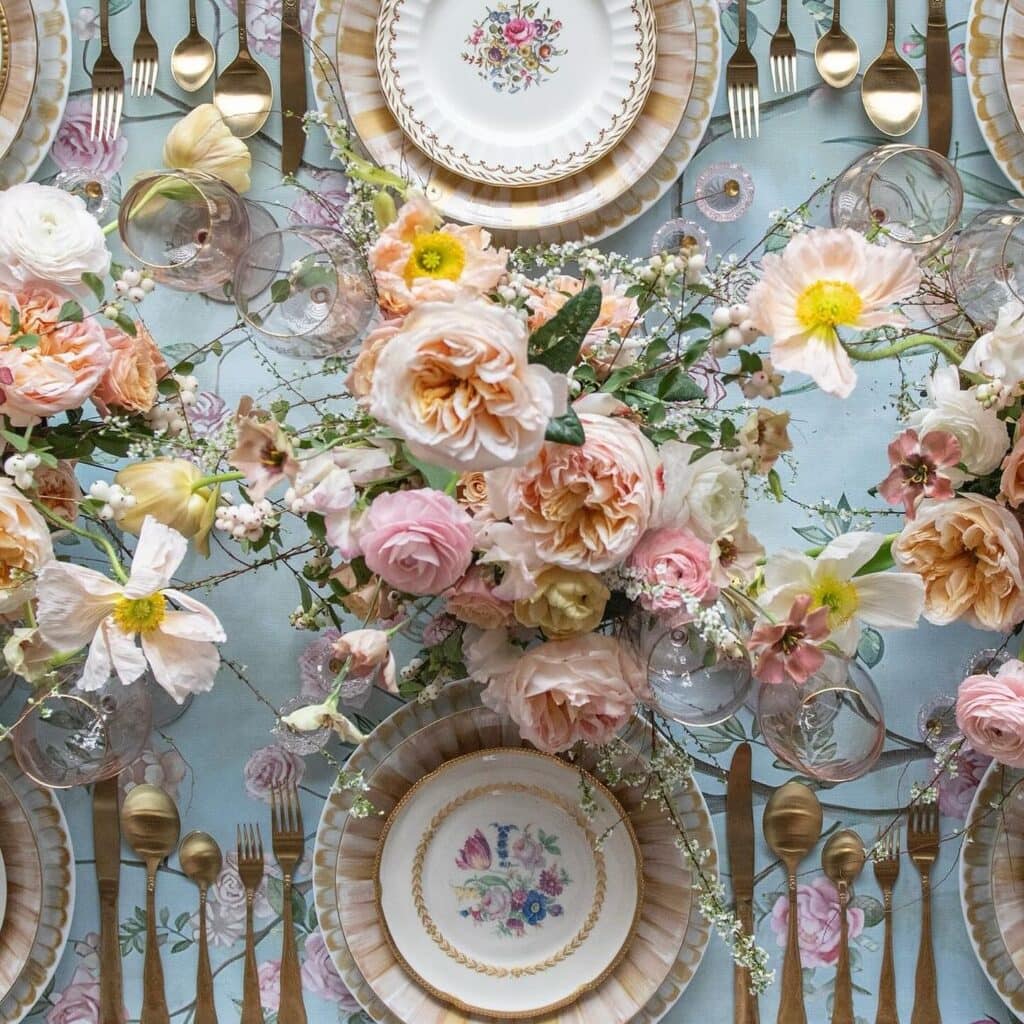
Blush and dusty rose remain popular across LA weddings and photograph particularly well in hotel venues with warm uplighting. We pair these with ivory, champagne, and soft peach accents to add dimension.
Deep and saturated palettes like burgundy, plum, rust, and aubergine suit late summer and fall venues and work especially well at vineyard properties and outdoor estates. These palettes read as luxurious and editorial in photography.
Greenery-forward designs with white accents have become a signature at garden and estate weddings throughout the San Fernando Valley and foothill communities. Tropical greens, Italian ruscus, and monstera leaves create a lush, immersive feeling that the room itself can’t provide.
What are the ceremony floral elements every wedding needs?
The ceremony is where the photographs happen. Every decision here needs to account for how it looks on camera, not just how it looks in person standing in the room.
The ceremony arch is the most impactful single element we design. Done well, it frames the couple, gives the officiant a backdrop, and appears in every ceremony photograph that gets saved and shared. We build arches in fresh blooms, pampas, greenery, or a combination of all three depending on the couple’s direction and the venue. Our floral arches service covers the full range of what’s possible here.
Aisle markers guide the eye toward the altar. We use anything from simple tied bunches of greenery on chairs to freestanding arrangements, to a full petal aisle. The scale should match the venue. A cathedral-style aisle in a hotel ballroom calls for something more formal than a barefoot beach ceremony.
Escort card and seating display florals are often overlooked in the planning process. A well-designed escort display at the cocktail hour entrance sets an immediate tone before guests even reach the reception room. Some of our most photographed work has been escort walls, petal-covered table arrangements, and floral frames around name displays.
How do you design reception florals that work as a complete room?
The reception room is where most guests spend most of the evening. It’s also where the biggest photographic moments outside the ceremony happen: first dances, speeches, cake cutting, and the general ambiance that fills every candid shot.
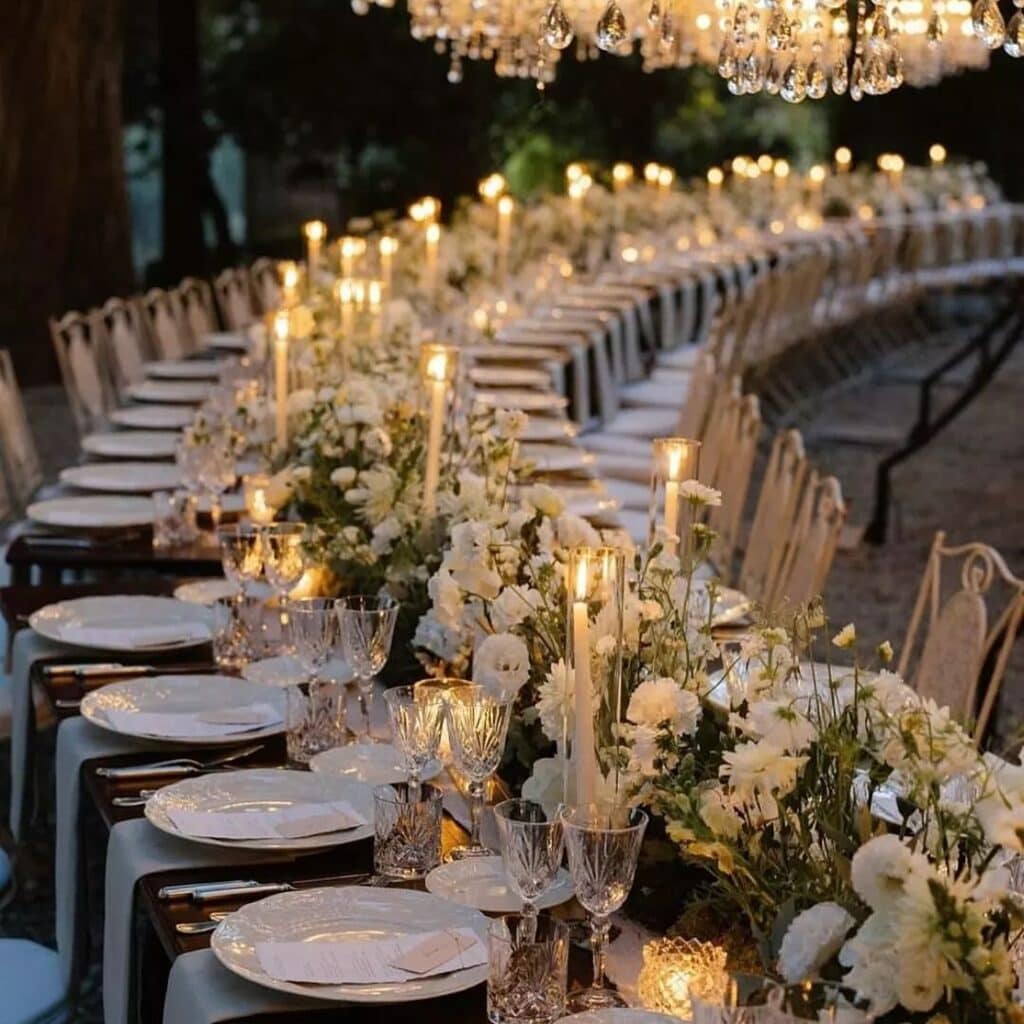
Centerpieces carry the most visual weight on the table. We design them in three heights depending on the venue and the couple’s preference. Low arrangements, typically 12 to 16 inches, keep conversation easy and suit venues with lower ceilings. Mid-height designs sit around 24 inches and work well in most ballrooms. Tall arrangements, 36 inches and up on a pedestal, create drama and formality, which suits larger hotel venues and grand estate receptions. Read more about creating elegant floral displays for any occasion.
The sweetheart table or head table deserves its own treatment. This is where the couple sits and where the camera spends a significant portion of the evening. We typically design a lush, low installation of blooms directly on the table, or a cascading greenery and flower drape that runs the length of the table behind the couple’s seats.
Bar florals are one of those details that lift the whole room. Guests stand at the bar longer than anywhere else, and a beautifully dressed bar, whether that’s two statement arrangements flanking the back bar or a full floral garland running the front, photographs constantly throughout the evening.
We also design fresh flower bars for weddings, where guests can build their own take-home bouquet during cocktail hour. These are incredibly popular at Southern California weddings right now and make for genuinely memorable moments alongside the standard event photography.
What role does a flower wall play at a wedding?
A flower wall serves a different purpose than any other element in the room. It’s not a centerpiece or an arch. It’s a focal point that defines an entire section of the venue. At a wedding, the two most powerful positions for a flower wall are behind the sweetheart table and as the backdrop for the ceremony altar.
Both placements earn enormous photographic return. The ceremony wall appears in every shot taken during vows. The reception wall shows up in speeches, first dances, portraits, and every candid moment that happens near the couple’s table.
We offer a flower wall rental collection for couples who want the impact at a fixed price point, and we build fully custom fresh-bloom walls for clients who want something designed specifically for their color story. Our post on flower walls for weddings covers everything you need to know about choosing the right option.
How should you plan the bridal bouquet alongside the rest of the design?
The bouquet is the most personal floral element of the whole day. It’s also the one element that appears in virtually every photograph taken of the couple. That means it needs to look right against the dress, against the arch, against the venue backdrop, and in the close-up detail shots the photographer will take. That’s a lot to ask of one bunch of flowers.
We always design the bouquet in the context of the full floral plan rather than in isolation. The bouquet should feel like it came from the same world as the arch, the centerpieces, and the flower wall. When the bouquet is sourced from the same palette and the same varieties, the whole day photographs with visual consistency.
Size matters more than most couples expect. An oversized cascading bouquet can look magnificent in formal portraits but awkward in candid shots on a dancefloor. A smaller, tighter arrangement travels better through a day of movement. We talk couples through this at consultation. The right size depends on body frame, dress silhouette, and how active the day will be. Our guidance on floral bouquet considerations covers the common questions in more detail.
What does it actually cost to do wedding florals properly in Los Angeles?
Wedding florals in LA vary considerably based on the scope of the design. A simple ceremony arch, a bouquet, and low centerpieces for 15 tables is a very different project from a custom flower wall, tall centerpieces for 40 tables, a full ceremony setup, escort display, and bar florals.
What we can say clearly: attempting to save money by splitting the floral work across multiple suppliers is almost always a false economy. When the ceremony arch comes from one studio, the centerpieces from another, and the bouquet from somewhere else, the room shows it. The palette doesn’t cohese. The design feels assembled rather than intentional. Guests may not be able to articulate why it looks off, but they feel it.
Working from one floral brief with one design team produces a more cohesive result and is typically more cost-efficient than managing three separate vendor relationships. Our floral arrangements service and custom installations work together under one plan.
We work with couples across Beverly Hills, Malibu, Pasadena, Santa Monica, and across Southern California. For Beverly Hills weddings and Malibu weddings, lead times are often longer due to venue booking schedules, so we recommend reaching out at least eight to twelve weeks before the date.
When should you book your LA wedding florist?
For peak season weddings between May and October, eight to twelve weeks minimum. Twelve to sixteen weeks is better if you want a full custom build with fresh-bloom elements and a flower wall. The design time alone is three to four weeks, and flower sourcing for specific varieties in specific colors needs to be locked in early.
Off-peak weddings (November through March) have more flexibility, though popular dates still fill up. The benefit of an off-peak date is that the design conversation can move faster and flower sourcing is less competitive.
If you’re planning a large-scale wedding at a destination venue like Sunstone in Santa Ynez or a private estate in Ojai, add another two to four weeks to whatever timeline you’re currently working with. Logistics for installations outside the immediate LA area require additional planning. Our custom flower installation service covers destination and regional events throughout California.
If you’re planning a wedding anywhere across the Los Angeles area, from the beach communities in Santa Monica and Manhattan Beach to the hills above Beverly Hills and Bel Air, we’d love to talk through your vision. Reach out to the Flower Gypsies studio and we’ll sketch out a direction that fits your venue, your date, and what you’re looking to create.
Frequently asked questions
What wedding floral elements should I prioritize if I have a limited budget?
Put the money where the camera spends the most time. The ceremony arch and the sweetheart table or head table are the two highest-return investments in wedding florals. Both appear in the formal portraits and throughout the candid photography. From there, prioritize one statement centerpiece design for the guest tables. Alternating tall and low rather than trying to make every table identical can stretch a budget while keeping visual interest throughout the room.
How far in advance should I book a wedding florist in Los Angeles?
Eight to twelve weeks is the minimum for peak season weddings between May and October. For a full custom build that includes a flower wall, a fresh-bloom arch, and tall centerpieces, twelve to sixteen weeks gives us the time to design properly and source exactly what we need. Off-peak dates between November and March have more flexibility, but popular weekends still fill up. Book as early as you know the date.
Can you do both the ceremony flowers and the reception florals together?
Yes, and this is the approach we recommend. When one team handles the ceremony arch, the aisle, the bouquets, the centerpieces, and any statement installations, everything comes from the same design direction. The palette, the flower selection, and the overall feel of the day connect visually from ceremony to last dance. Splitting the work across multiple florists almost always produces a room that looks patched together rather than designed.
What flowers hold up best at outdoor LA weddings in summer?
Garden roses, lisianthus, orchids, and hydrangeas are among the most heat-tolerant fresh blooms for outdoor events. We also incorporate dried elements like pampas grass and protea, which are immune to temperature entirely. For full midday outdoor events in July or August, we’ll sometimes recommend a silk-and-fresh hybrid for large pieces like flower walls, which guarantees a consistent look from setup through last photo. Indoor or climate-controlled venues have a much wider range of options regardless of season.
Do you design flower walls specifically for wedding ceremonies and receptions?
Yes. Flower walls are one of our most-requested wedding elements, both as ceremony backdrops behind the altar and as reception focal walls behind the sweetheart table. We offer both a rental collection and fully custom fresh-bloom builds. A custom wall is designed entirely around your color palette and venue, while a rental piece from our curated collection gives you a beautiful, production-ready backdrop at a defined price. Both options include delivery, installation, and removal by our team.
Which LA neighborhoods and venues do you serve for weddings?
We cover all of Los Angeles County and broader Southern California, including Beverly Hills, Malibu, Santa Monica, Pacific Palisades, Bel Air, Brentwood, West Hollywood, Hollywood Hills, Manhattan Beach, Pasadena, Calabasas, and Hidden Hills. We also regularly design for weddings in Orange County, Palm Springs, Santa Barbara, Ojai, and the Temecula wine region. For destination venues outside the immediate LA area, we factor in logistics during the initial consultation and are transparent about any travel considerations upfront.