

How do you create elegant floral displays for any occasion?

Quick Answer
Elegant floral displays begin with a clear understanding of the occasion, the venue size, and the color story you want to tell. Centerpieces, ceremony arrangements, foyer displays, and reception flowers all play different roles, and getting those roles right is what separates a beautiful event from a truly unforgettable one.
We’ve been designing floral arrangements across Los Angeles for over a decade, and the question we hear most from clients is some version of the same thing: how do I make sure the flowers actually work together? Not just as individual pieces sitting on tables, but as a whole visual experience that feels considered, cohesive, and right for the occasion.
This guide covers what we know from years of creating floral arrangements for corporate events, brand activations, and private celebrations across Los Angeles. Whether you’re planning a 300-person gala or an intimate dinner for twenty, the same principles apply. The scale and details shift.
What types of floral displays work best at events?
Not every arrangement serves the same purpose, and understanding the difference is the first step to getting them right. At Flower Gypsies, we think about floral displays in four main categories, each with its own job to do.
Centerpieces anchor the tables and set the tone for the whole room. They’re the pieces guests spend the most time looking at during a seated event, so they deserve the most creative attention. A low, lush centerpiece of garden roses and ranunculus reads intimate and romantic. A tall, dramatic arrangement of orchids and tropical greenery reads grand and celebratory. The choice should match the mood of the event, not just the flowers in season.
Ceremony arrangements (aisle flowers, chair accents, altar sprays) guide the eye toward the focal point of the moment. These pieces need to photograph well and hold up in outdoor Southern California heat. We lean toward sturdy blooms like peonies, garden roses, and lisianthus rather than anything that wilts quickly.
Ceremony arches and arbors are among the most photographed elements of any ceremony. Done well, they frame the hosts without overwhelming them. The arch should suit the venue’s scale: a delicate single-bloom arch gets lost in a grand ballroom, while a heavily layered design can crowd a small garden ceremony. We size every arch to its setting.
Foyer and entrance displays are the first flowers guests see and set expectations for everything that follows. A striking entrance arrangement (a tall pedestal display, columns of florals flanking the door, or a lush ground installation) tells guests this event was designed with care. We often pair entrance florals with custom signage to create an arrival experience that feels complete.

How do you choose seasonal flowers for an event in Los Angeles?
Los Angeles has a climate that gives us access to more varieties year-round than almost anywhere else in the country. That said, working with what’s in season still makes a real difference in quality and in how the finished arrangements feel.
In spring, we reach for ranunculus, sweet peas, anemones, and garden roses. These are LA staples that appear at everything from Pasadena garden parties to outdoor ceremonies in Malibu. Summer calls for dahlias, sunflowers, and lisianthus, all of which hold up well in the heat and carry strong color through long outdoor events. Fall and winter shift toward richer palettes: burgundy garden roses, deep plum dahlias, amaranthus, and eucalyptus. For holiday events, which are among our busiest months in LA, we lean into these tones alongside touches of white and gold.
One practical note: confirm flower availability with your florist at least six to eight weeks out. Seasonal supply can shift, and having two or three bloom options per role in the arrangement means you’re never caught short.
How do you build a color story for floral arrangements?
A color story is the decision about which hues will anchor the floral design and how they’ll relate to each other across every arrangement at the event. It’s not just about picking flowers you like. It’s about making sure every table, every entrance display, and every ceremony piece reads as part of the same visual language.
We typically work with one of three approaches. Monochromatic (one color at different tones and saturations, like blush to deep rose to burgundy), complementary (colors opposite on the color wheel, like peach and dusty blue), or analogous (colors that sit next to each other, like blush, coral, and soft orange, which read warm and celebratory for outdoor daytime events).
A common mistake in self-planned events is mixing palettes without a clear anchor. When every table has a slightly different color mix and there’s no unifying tone, the room looks busy rather than designed. Choose one anchor color, build around it consistently, and let the textures add interest.

How do you scale floral arrangements to fit the venue size?
Scale is one of the areas where even well-intentioned floral plans go wrong. An arrangement that looks stunning in a studio can disappear in a 10,000-square-foot ballroom. A dramatic pedestal that reads as grand in a showroom can feel suffocating in a private dining room for twelve.
Centerpiece height should either stay below eye level for seated guests (under 14 inches) or go well above it (36 inches or more). The danger zone is anything in the 18 to 30-inch range, which sits directly in guests’ line of sight and blocks conversation.
For large venues like hotel ballrooms in Beverly Hills or outdoor canyon spaces, we layer heights across the room. Low centerpieces sit on some tables, tall arrangements on others. Pedestals or hanging pieces to draw the eye upward. Smaller, more intimate venues need restraint. A single, well-chosen arrangement of high-quality blooms will always read better than a crowded table where the budget was spread too thin.
How do you mix textures in a floral display?
Texture is what gives a floral arrangement life. A bouquet of identical roses, however beautiful the bloom, reads flat compared to one that layers roses with something feathery, something trailing, and something structural.
We build texture using four categories: focal flowers (garden roses, peonies, protea, dahlias); secondary flowers that fill in around them (spray roses, lisianthus, well-used carnations); textural elements that add interest without competing (pampas grass, eucalyptus, astilbe, scabiosa pods); and structural elements that give the arrangement its shape (branches, large tropical leaves, tall grasses). A well-balanced arrangement draws on at least three of these. Texture also includes the vessel: a low compote dish creates a different feel than a tall glass cylinder or a hammered brass urn, and we always choose vessels before finalizing the arrangement design.
How do you work out a floral budget for an event?
Budget is a real part of every conversation we have with clients. Flowers for events are priced on bloom cost, labor, delivery, setup, and breakdown, and the logistics are often as significant as the flowers themselves. For a full event with ceremony and reception florals in Los Angeles, budgets typically run from $3,000 for focused, minimal designs to $15,000 and above for full custom work across a large venue.
Spend on the pieces guests will look at longest: centerpieces and the ceremony focal point. Use more affordable blooms or lush greenery for supporting pieces like aisle arrangements, chair accents, and welcome table displays.
If you’re exploring floral arrangements in Los Angeles for the first time, we recommend booking a consultation before setting any numbers in stone. The brief changes the cost significantly, and it helps to talk through priorities before committing to a direction.
What makes private event floral arrangements different from corporate event flowers?
The emotional register is different, and the design priorities follow. Private event florals are deeply personal: they tie back to the host’s story, their aesthetic, the season, and the feeling they want guests to carry home. We spend more time talking about what the flowers should mean before we talk about what they should look like.
Corporate event flowers serve a different purpose. The brand is the brief. Colors are locked in by brand guidelines, and the design needs to photograph well for social content without distracting from the event’s core message. Private parties sit somewhere between the two: personal events where the client’s taste drives everything, without the formality of a corporate brief. They’re often where we take the most creative risks, because the brief is simply “make it feel like me, but more.”
Our custom floral installations page covers larger-scale work for corporate events and brand activations. For something interactive, our fresh flower bar is one of the most popular additions to galas and corporate events across Southern California.
How do you create beautiful floral arrangements for private parties and intimate gatherings?
Private parties are where we love to get specific. A dinner for twenty deserves as much design intention as a gala for two hundred, because at that scale, every guest is close enough to notice the details. For intimate gatherings, we tend to go lower and lusher with centerpieces. A low, garden-style arrangement in a compote creates a warm, abundant feeling. Think peonies, garden roses, trailing sweet peas, and a handful of herbs for fragrance. This works beautifully for seated dinners in private homes across West Hollywood and the Hollywood Hills.
For clients planning private parties in the Beverly Hills area or further out toward Malibu, we’re familiar with the range of venue styles and can design to suit everything from a breezy coastal aesthetic to a formal estate-style dinner. To discuss your event and start planning, reach out to us directly. We design for gatherings of all sizes across Southern California.
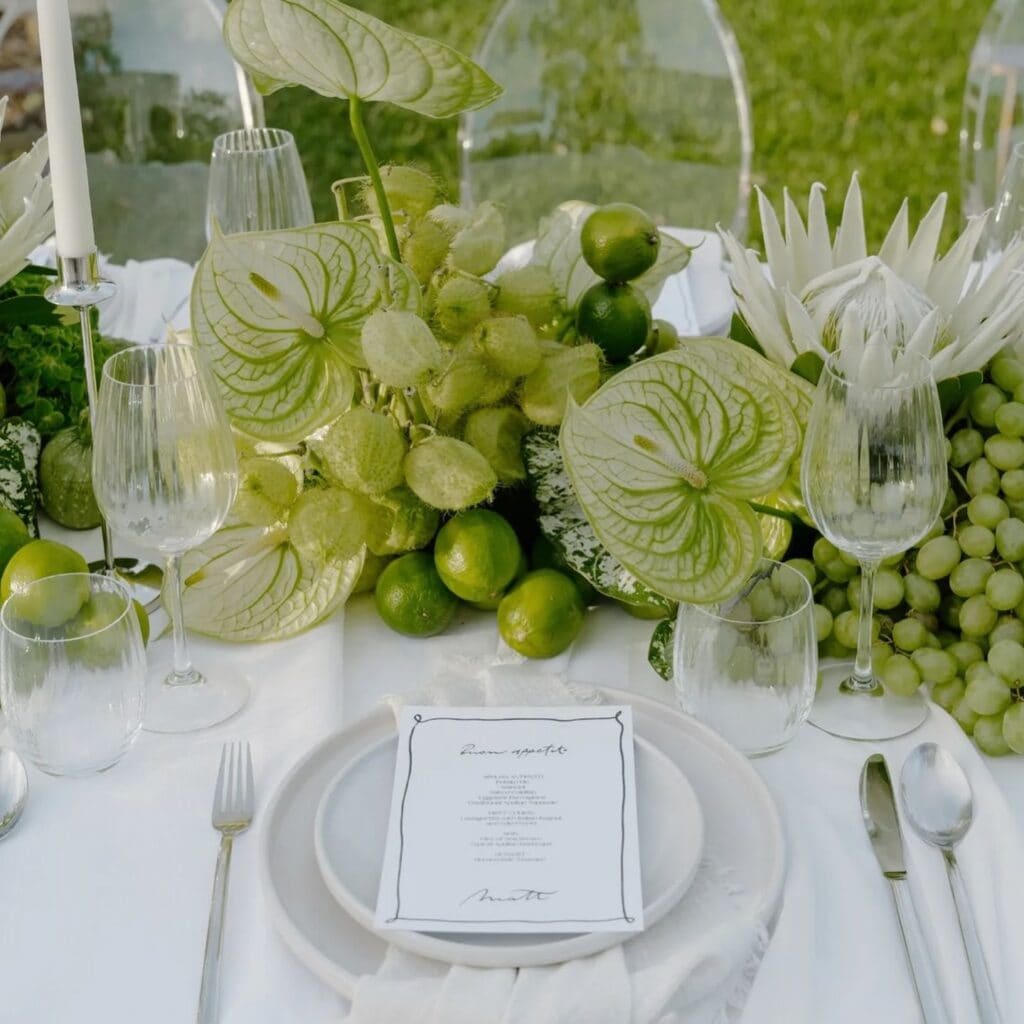
Floral design for events isn’t a formula. It’s a set of decisions that build on each other from the first brief to the final stem placement. To see more of what’s possible with custom floral arrangements, explore our services or browse the flower wall rental collection. Flower walls are a separate category entirely: our guide on how flower walls transform event spaces covers the distinction in detail.
Frequently asked questions about elegant floral displays
How far in advance should I book a florist for an event in Los Angeles?
For large events, we recommend reaching out at least six to twelve months before your date, particularly if your event falls between April and October. Corporate events and private parties with fewer than 100 guests can often be planned within six to eight weeks, though earlier is always better for securing specific seasonal blooms.
What is the difference between a floral arrangement and a floral installation?
A floral arrangement is a self-contained piece: a centerpiece, a bouquet, or an altar spray. A floral installation is a larger structural piece designed to become part of the venue itself, like a flower arch or ceiling canopy. Installations require more planning, structural support, and setup time than arrangements.
Can floral arrangements be designed to match a corporate brand color palette?
Yes, and we do this regularly for brand activations, product launches, and corporate galas across Los Angeles. We source blooms that align with brand color guidelines and, where exact matches are needed, use floral dyes or tinted blooms. We advise on which blooms hold color best and which are easiest to source true-to-palette.
What floral arrangements work best for outdoor events in Southern California?
Heat-tolerant blooms are key for outdoor events in LA. Garden roses, tropical varieties like birds of paradise and anthuriums, succulents, and structured foliage like eucalyptus and ferns all perform well in warm conditions. We avoid flowers with high water content or thin petals for outdoor arrangements in full sun.
How do floral arrangements for large events differ from those for private dinner parties?
Large-event arrangements need to work across arrival, cocktail hour, reception, and often a head table, so the design must feel cohesive across a larger footprint. Private dinner arrangements can focus everything on the table experience, allowing for more detail and a more intimate feel. Larger events involve more pieces, which means more planning and a longer setup window.
Do you offer fresh flower arrangements for events outside of Los Angeles?
Yes. While Los Angeles is our home base, we regularly design and deliver floral arrangements for events in Orange County, San Diego, Santa Barbara, Palm Springs, and across Southern California. For larger events, we also travel to the San Francisco Bay Area. Delivery and setup fees apply based on location and event scale, and we’re happy to discuss your specific location when you reach out.


