

What are the most popular flowers for elegant floral installations?

We get asked this question often, usually sitting across from a bride at our West Hollywood studio or on a call with an event planner mapping out a gala in Century City. What flowers actually work at installation scale? Not which ones are pretty in a vase, but which ones photograph well under event lighting and create the kind of room you remember for years. After more than a decade designing custom floral installations across Los Angeles, we have a clear picture of which blooms earn their place and why. This guide goes through each one: the moods they create, when they’re available, and where they work best.
Why do peonies work so well in large floral installations?
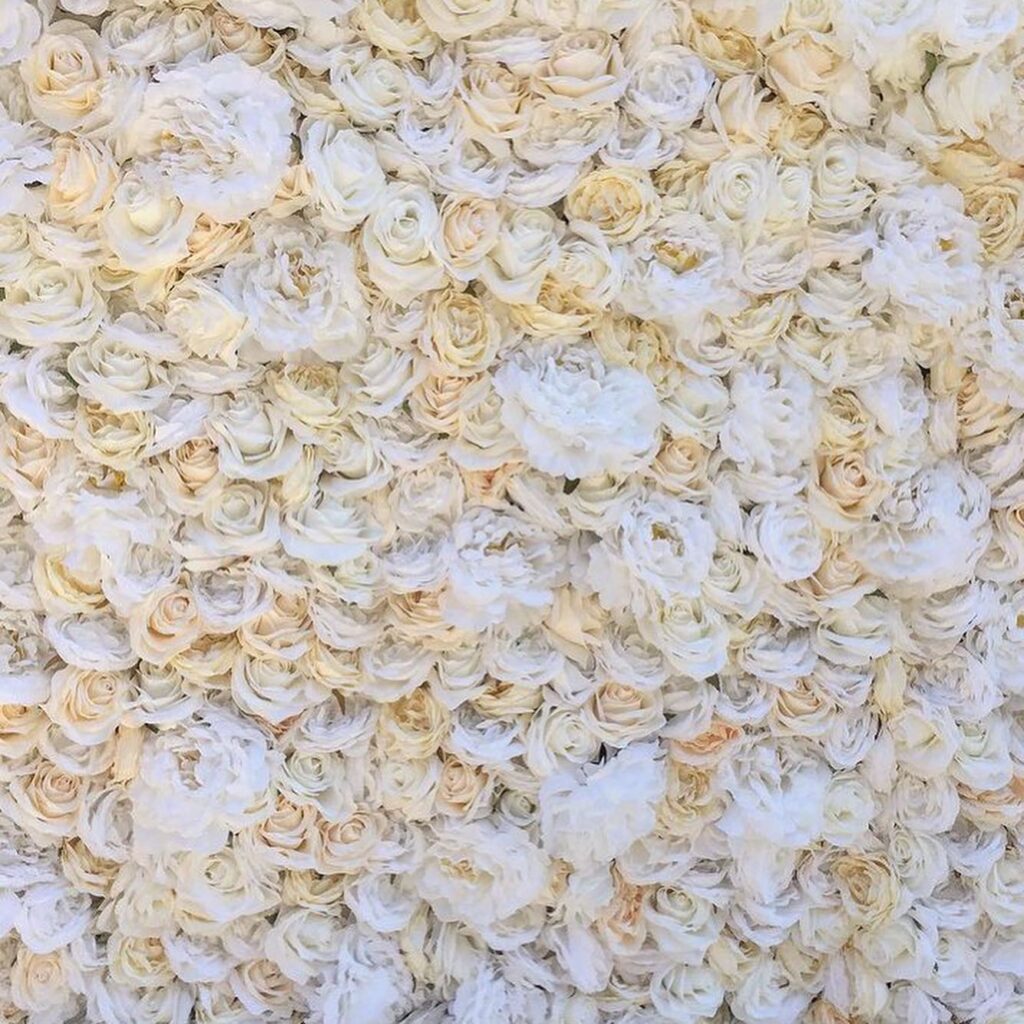
Peonies are the most requested bloom we work with for luxury residential events and high-end galas. A single open peony head measures four to five inches across, which means a ceiling cascade or altar arch reads as lush and generously scaled from across the room. The color range runs from deep burgundy and coral through blush, cream, and pure white, giving us serious design flexibility. For a Malibu coastal celebration, we’ll lean toward palest whites and blushes. For a Beverly Hills private gala with a jewel-tone brief, the deeper corals hold their own under warm lighting.
The mood peonies create is unambiguously romantic. Generous, soft, and celebratory without being fussy. That softness makes them ideal for ceiling cascades where the blooms hang at eye level and guests walk beneath them. We’ve built ceiling cascades with peonies for events at Greystone Mansion, private estates in Bel Air, and rooftop venues in Downtown LA.
Peonies are primarily a spring bloom, peaking between April and June in Southern California. They’re available year-round through our import partners, but the cost outside peak season reflects that. If you’re planning a spring event, this is the bloom to build your design around. For fall and winter, garden roses give the same lush quality without the seasonal price.
What makes garden roses the most versatile choice for elegant installations?
Garden roses are our workhorse bloom, and we mean that as a compliment. Unlike standard spray roses, they have layered, densely packed petals that give them real depth. They read as painterly in photographs, which is why they appear in almost every large-scale installation we’ve designed.
The variety within the garden rose family is wide. David Austin roses have a cupped, old-fashioned shape that sits beautifully in romantic, English-garden-style designs. Juliet and Patience varieties offer a warm peachy-apricot tone that works especially well against marble interiors and cream linens. White garden roses are essential for clean, editorial installations where we want sculptural impact rather than color.
Because garden roses are cultivated year-round, they’re the reliable spine of most large installations, with seasonal blooms filling in around them. For a full floral arrangement covering ceremony, reception, and everything in between, garden roses are almost always in the mix.

How do hydrangeas change the scale and texture of an installation?
Hydrangeas are one of the most reliable ways to build volume quickly without losing elegance. A single head can be nearly as wide as your hand, and they cluster together to create a billowing, cloud-like texture. For large-scale flower walls, ceremony backdrops, and entrance archways, they fill space while keeping the overall palette soft and cohesive.
The color range covers white, cream, blush, dusty blue, lavender, and deep burgundy. The blue and lavender tones are particularly useful when a client wants to move away from the typical blush palette without going loud. We’ve used dusty blue hydrangeas for several corporate activations in Century City where the brief was “sophisticated, cool, very LA.” One thing they require: proper conditioning before they go into a large piece. An unconditioned hydrangea wilts fast under event conditions. Our team conditions every stem for at least 24 hours before a build.
Why are ranunculus a favorite for spring events and intimate installations?
Ranunculus have a quality that’s hard to describe and easy to photograph. The petals spiral outward in thin paper-like layers as the bloom opens, creating detail that reads beautifully close up and from across the room. They bloom naturally between January and May in Southern California, aligning perfectly with the late-winter and early-spring event calendar that’s popular across Laguna Beach, Santa Barbara, and the coastal venues north of Malibu. Colors span coral, poppy red, deep plum, lemon yellow, cream, and the palest blush.
At installation scale, ranunculus work best as an accent rather than the primary structural flower. Their stems aren’t as sturdy as a peony or garden rose, so we use them to fill in detail and create that layered, gathered-from-a-garden look clients often reference in inspiration images. For a loose, romantic ceremony arch, ranunculus mixed with sweet peas and garden roses is one of our most requested combinations.
What role do anemones and lisianthus play in high-end floral design?
Anemones are a study in graphic contrast. The bloom has a bold, dark center (usually near-black) surrounded by delicate white or jewel-colored petals, giving any arrangement an immediate editorial quality. We use them when a client wants an installation that feels fashion-forward rather than traditionally romantic: a black-and-white floral concept for a brand event, a deep burgundy winter gala at a Downtown LA venue, or a moody editorial piece for a celebrity home. Anemones are in season from autumn through spring, making them especially relevant for the fall event calendar across Orange County and greater LA.
Lisianthus is the quiet achiever. Its ruffled petals closely resemble a rose from a distance, but it’s more cost-efficient and longer-lasting. We use it as a face flower in its own right when we want romantic softness without the premium price, and as a supporting bloom to fill space around statement flowers like peonies or orchids. It comes in white, cream, deep purple, pale lavender, and soft pink. For a custom installation where bloom selection is part of the concept, lisianthus earns its place every time.
When should you choose orchids for a luxury installation?
Orchids are the bloom of choice when the brief is maximum drama with minimum clutter. A phalaenopsis stem has three to twelve blooms arranged in an elegant arc, covering significant vertical space in a hanging or cascading installation. Cymbidium orchids are heavier, with waxy petals in greens, deep burgundy, and cream that bring a near-architectural quality to large-scale pieces.
Our most consistent use of orchids is for corporate galas and brand activations where the design needs to read as luxury from across a large ballroom. They signal intention without competing with anything else in the room. We’ve designed phalaenopsis ceiling installations for Beverly Hills hotel ballrooms where the brief was “elegant but not floral in a traditional sense.” Orchids answer that exactly.
White and pale green phalaenopsis are the most-requested for luxury corporate work. The near-monochrome palette photographs cleanly against most branded color stories. For private residential events and galas, we use orchids as an accent in a mixed installation, adding height and structure to a piece otherwise built from roses and peonies. They’re available year-round and hold well under warm event lighting.
What do calla lilies and sweet peas bring to a floral installation?
Calla lilies have a sculptural, geometric quality that most blooms don’t. The single smooth spathe curves into a clean cone, creating bold, graphic lines at installation scale. They work especially well in contemporary spaces: glass and steel venues, modern hotel lobbies, minimalist ceremony spaces in Culver City or Santa Monica where the architecture is clean and the design intent is editorial. They hold their shape for days after installation, making them ideal for events that need advance setup.
Sweet peas are almost the opposite. Delicate, ruffled, and light, they trail and curl naturally, perfect for anything that needs to feel effortlessly gathered. Think tendrils winding through a ceremony arch alongside garden roses and ranunculus at a Malibu estate celebration. Sweet peas are intensely fragrant, filling a ceremony space the way no other bloom does. They’re spring bloomers, available from February through May.
How does clematis add depth and movement to a large installation?
Clematis is the bloom most often absent from a client’s reference images and most often mentioned by guests after the event. It trails. It climbs. It adds a wildness that structured blooms alone can’t create. We use it to bring organic movement to hanging installations, ceremony arches, and ceiling cascades where we want the piece to feel like it grew rather than was constructed.
The blooms come in lavender, deep purple, white, and pale pink. Against a mass of roses and peonies, a sweep of clematis vine gives the eye something unpredictable to follow, which lifts an installation from beautiful to genuinely memorable. We’ve used it extensively in event atmosphere installations where the brief called for something that felt like a secret garden, and it’s the detail that distinguishes a trend-forward Los Angeles floral installation from one that follows a familiar script.
Clematis is primarily a spring and early summer bloom, and one of the more delicate varieties to handle at scale. We’re upfront with clients about lead times when sourcing it outside the season.
How do you choose the right combination of blooms for your specific event?
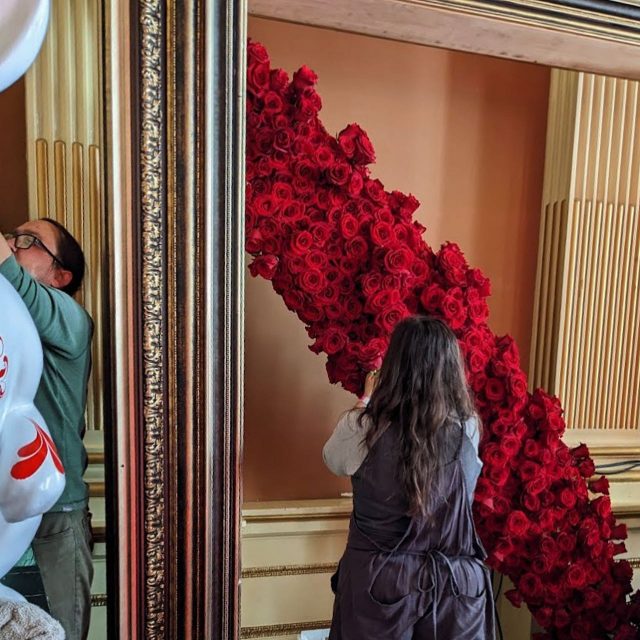
It comes down to four things: the venue, the season, the aesthetic brief, and the structural role each bloom will play. A ceiling cascade needs stems with enough weight to hang cleanly. A flower wall needs blooms that hold without water for several hours. An arch needs varieties at different scales, from large face flowers down to fine trailing details.
We start by asking what mood the client wants the room to hold. Romantic and soft points toward peonies, garden roses, ranunculus, and sweet peas. Luxurious and architectural calls for orchids, calla lilies, and sculptural greenery. Editorial and contemporary means anemones, clematis, and a restrained palette rather than layered abundance.
Season matters more than most clients expect. Spring events have access to ranunculus, sweet peas, anemones, and the best peony crop of the year. Summer events lean on garden roses, hydrangeas, and orchids that hold well in warmth. Fall and winter call for lisianthus, deeper-toned roses, and calla lilies. We’ll always be direct about what’s going to work for your specific date.
If you’re planning a private celebration, brand activation, or corporate gala in Beverly Hills, Malibu, Orange County, or anywhere across Southern California, reach out to our studio and we’ll sketch a direction together. We cover everything from the flower wall rental collection through fully bespoke custom installations. For Beverly Hills events, our Beverly Hills custom installations page is the right starting point. You can also read our guides to mastering elegant floral displays and how custom floral installations personalize an event before we connect.
Frequently asked questions
What are the most popular flowers for elegant floral installations in Los Angeles?
Peonies, garden roses, hydrangeas, ranunculus, and orchids are the most-requested blooms for high-end installations across LA. The right combination depends on the event type, venue, and season. Spring has the widest selection, while orchids and garden roses give year-round reliability.
Are peonies available year-round for floral installations?
Peonies peak from April through June in Southern California. They can be sourced year-round through import partners, but the cost rises outside peak season. For fall and winter events, garden roses offer a similar lush, layered quality. We always cover seasonal availability in the initial consultation.
Which flowers work best for a luxury corporate gala?
Phalaenopsis and cymbidium orchids are the top choice for galas where the brief calls for drama without a traditional floral feel. Calla lilies, white hydrangeas, and sculptural greenery also read well in large ballrooms. These varieties hold under warm event lighting and photograph cleanly against most branded color stories.
What flowers are best for a romantic ceremony arch?
Garden roses, peonies, ranunculus, sweet peas, and clematis vine form the foundation of most romantic ceremony arches we design. Ranunculus and sweet peas add trailing detail, while peonies and garden roses anchor the arch structurally. For spring events in Malibu, Santa Barbara, or Laguna Beach, this is one of our most-requested designs.
How far in advance should I book a floral installation in Los Angeles?
Six to eight weeks ahead works for most events. For peak event season between April and October, or for large corporate activations during awards season, ten to twelve weeks is safer. Out-of-season blooms like clematis or sweet peas require advance ordering, and lead time protects the design process and your flower options.
Can you mix multiple flower varieties in one installation?
Yes, and most of our best work uses four to seven varieties. Mixing lets us build at different scales: large face flowers like peonies or orchids anchor the design, while finer varieties like lisianthus, anemones, or sweet peas add texture at close range. The right mix depends on the installation format, and we’ll walk you through the options in a design consultation.


